A short guide to survival after a big exit (especially for those with anxiety)
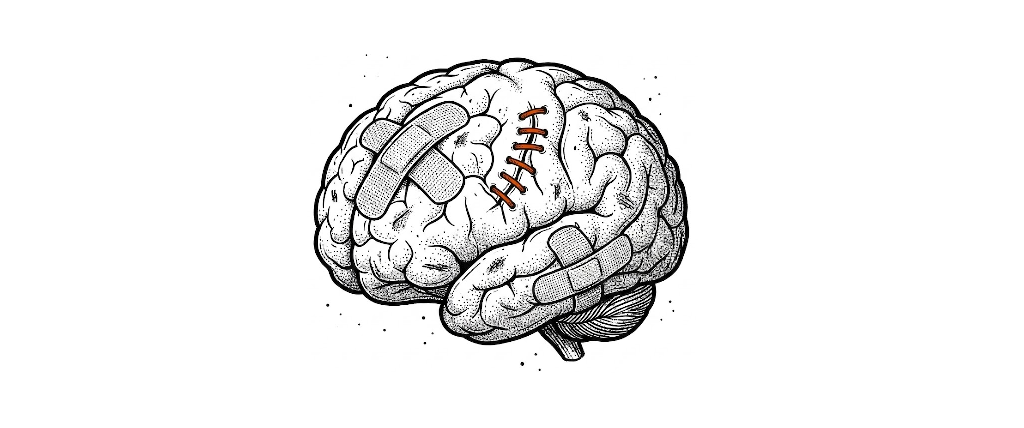
Whilst running the software business that I founded in 2007 my entire life was ordered and executed through to-do lists. My to-do list was the first app I opened every morning, and the last app I closed every night.
I ploughed through my list from the moment I woke because no matter how horrible each item was - they were each non-negotiable. This enforced a consistent discipline, compounding to create progress which led to the sale of a very successful business.
At the top of my to-do list I kept this quote from the TV series The Gentleman:
"It is a lucky man who is happy with his place in life"
Given it's position at the top of my list, it was the first and last thing I thought about every day.
Having sold the business last year thus removing that particular 800lb gorilla from my shoulders - I've cranked up the search for that "luck" and to finally be happy with my place in life.
But Simon, you sold your business and effectively retired - you are surely now that lucky man?!
Sadly not.
It doesn't work like that. I'll let my psychologist provide some background via her letter to my insurance company in 2023:
"Simon has emotion dysregulation, anxiety, a tendency towards catastrophic thinking and a fragile sense of self. He does not have a formal psychiatric diagnosis but would be in line with a generalised anxiety presentation."
It was surprisingly cathartic to read this description of my brain because for the first time in my life somebody had given me a technical description of it.
Before then, all I knew was that my brain was wired up a bit differently and prone to thoughts that would throw me around like being adrift in rough seas. My to-do list was the anchor. It tethered my nervous energy to actionable items.
Selling the business didn't magically rescue me from the rough seas. In many ways, not having the business to-do list as a tether created the need for even more discipline than ever before.
A new to-do
Alas, I could not abandon the structures and practices I put in place to run the business after its sale. This would have left me completely out to sea.
But why is that? Surely without stress my life is simple. I wake up each day, think about what I want for breakfast, walk the dog, maybe call a friend or two, and bask in my fucking greatness?
Again, sadly not.
Clearly, I'm no longer carrying my 800lb gorilla, for which I'm thankful every day.
However, even though removing my primate was freeing, I knew that not dragging him around with me daily would lead to the natural atrophy of both my body and mind. If I wasn't careful, this would eventually leave me too weak to deal with life's inevitable challenges or to perhaps take on new opportunities. In other words, in a lower-stress life post sale, small inconveniences feel like catastrophes and opportunities seem too overwhelming to take on.
To combat this, at the start of 2026 I wrote a business plan, and for the first time in my life the business plan was the business of Simon (that's me): a roadmap of personal challenges to replace my old corporate KPIs.
This set of outcomes gave me a set of physical and mental goals through which to orient daily/weekly/monthly to-do list items - the strategy I used to build the business in the first place.
The takeaway:
I'd recommend that anybody else enjoying their version of success not completely abandon what got them there in the first place. Yours might not be a to-do list, it might be some other ritual or discipline, but either way, you should keep it around in the aftermath of a sale.
Decompression FTW
I sold the business in May 2025.
Having taken time out over summer, I felt sufficiently decompressed and with a healthy suntan I spent September to December 2025 accidentally maxing out my poor brain again. I bounced from meeting to meeting, spending more time in London in those 3 months than I had the previous 9 months of the year.
My friends said I should take a year or two out. I ignored them.
Then in December 2025 I nearly had a panic attack. I was on my seventh coffee of the day pushing through the meetings and the tunnel vision started - not good.
Arriving home earlier than originally planned, my wife could not have been less surprised to hear I had finally tripped over my self-imposed workload.
Over that Christmas I admitted that I was struggling. I had not decompressed, and my friends were right, I needed time off. Lots of time off - but I didn't know how much would be enough.
Coincidentally, around the same time, I was given this guideline:
For each year spent in a high stress environment, a person will need one month of decompression.
I had spent over 20 years running a business. It would take me at least 20 months to decompress. Like a diver ascending from the bottom of the ocean - if I come up too quickly, I'll get the bends. Hence, I'm only halfway through my 20-month ascent, and the pressure is still real.
Clearly there are people out there who need no time to decompress, just like there are people who can hold their breath for 15 minutes.
The takeaway:
However, for the sake of this post I'll presume you're an average person, and you'll need to take a similar amount of time to decompress as I now am. This is a biological mandate - fight it at your peril.
Wellness is now a full-time job
I started going to the gym three times a week around the same time I started visiting my psychologist in 2023. Therapy taught me that without a healthy body it is impossible to have a healthy mind.
So I set out to convert my negative cycle in to a positive cycle per the diagrams below...
The positive cycle I created from that moment on was was exercise -> improved diet/less comfort eating -> healthier mind -> more positive thoughts -> motivation for more exercise -> repeat.
The prior cycle was sedentary life -> comfort eating > unhealthy mind -> negative thoughts - > alcohol/drugs to cover up bad thoughts -> more sedentary life (hangovers etc.) -> repeat.
So in the business plan I set myself a target of a half-marathon and a half Iron Man.
I downloaded Runna, and treated its instructions exactly like my to-do list... mindlessly putting on my running shoes and doing what it told me without fear of failure or worrying about how much it would suck.
This forced me to endure pain and created endurance and robustness that emulated that from which I previously derived from carrying the gorilla.
Experiences > Stuff
The trap that many successful people fall is buying a bigger house. They now have more space to fill with stuff.
So instead I made a conscious decision to stay put. Our current house is more than enough. It also provides a natural constraint to ensure we don't buy too much stuff.
Instead of stuff, I invest a huge amount of time and energy creating and organising experiences with friends and family. These are infinitely more fun, and ensure that I always have something to look forward to and I create memories with the people I love.
I cannot overstate the amount of joy it brings me to take friends to see their favourite bands, or visit a special location on a holiday with them.
It really is the gift that keeps on giving, and I'll continue to do this for the rest of my life.
Vulnerability and loneliness
It's lonely at the top. This was true in business but spending time with other founders and CEOs was a medicine for that loneliness. I was also able to let off steam with my senior management team, who were in the trenches with me.
It's lonely in retirement too if you're not careful. I can no longer complain about my problems, be that physical, mental or financial, to my friends and family. It would be tone-deaf of me.
It's also hard to stay in touch with my ex-colleagues from the business. They're still in the trenches, and I've left the battlefield. It's a natural drift but hard not to feel like I've abandoned them. I miss them.
Add that without work the time between seeing friends feels unnervingly longer.
This is a lot to unpack - so again after a few months of introspection, I've created mechanisms to be the one to bridge those gaps.
I remember my old work colleagues' birthdays. It's a small thing but texting them on their birthday shows I cared about them more than just as a work colleague. I meet up with them for a coffee or a beer as their time permits.
I take the lead in planning things with friends and family - be that a simple pub visit a few weeks in advance, to concerts, events and holidays. I purposefully fill my time with the right people in the right places as often as their schedules allow.
Balance
My greatest strengths are my greatest weaknesses. All the things that got me here, could just as easily undo me if I stopped managing them.
Now that the business is gone, my to-do list isn't about hitting financial, client, employee KPIs. It's about ensuring I don't drift back into the clouds. Being 'the lucky man' isn't a destination I've arrived at because of my success, it's something that I have to work on every single day. If you've had an exit, the same will likely be true for you too.
Good luck.