How I used AI to save £100k in legal fees
Preface: For the purpose of this article, I refer to Large Language Models simply as "AI." While my journey began with ChatGPT in 2022, I recently switched to Gemini/NotebookLM, which I’ve found superior for handling complex, multi-document document projects.
In a recent podcast with Greg Head of Practical Founders, I shared that we saved over £100,000 on legal and other professional fees during the sale of Fundipedia by using AI. Since I owned over half the company, that was a direct saving of £50k. That's not to mention the many weeks saved in waiting for my lawyers to review 100s of pages of documentation.
Greg was floored by that figure, so I wanted to flesh out exactly how I use AI to turn the legal dynamic upside down.

The 3am consultant
My AI obsession started in 2022. I set up projects for specific challenges, negotiations, and any other commercial or financial discussions I needed to prod and poke. This allowed me to group files and conversations and dip back into them as required whilst still preserving the history and context.
To be clear, my aim was not to avoid lawyers altogether, but instead to engage with them in the most high-value way possible.
AI converted my emails from broad statements such as “Can you review this 30 page document? or “Is what they're asking for normal?” to "I've accepted five of their changes, pushed back on two, and added some suggested edits from our side - please review before I send back".
I was no longer a passenger; I was a co-pilot. AI performed 70% of my thinking and helped me understand not just the what and how, but also the why. I could finally ask questions I was far too embarrassed to ask my super-smart (and super-expensive) lawyer such as , "What is an indemnity?" or "Why have we provided this warranty?" or my personal favourite "What exactly does best endeavours mean in this context?".
The end of the "Legal Weekend"
I'm a very impatient person. It's a blessing and a curse.
Prior to AI, I would receive a legal document from the other side on a Friday afternoon. Despite immediately forwarding to my lawyer, I'd often wait to Tuesday for an acknowledgement let alone a response. Super frustrating, and four days of momentum lost.
By using AI, I closed the feedback loop to near-zero. I could process a 60-page Sale and Purchase Agreement on a Friday night, and have refined instructions sitting in my lawyer’s inbox that evening. My lawyer could respond quickly given they had all the context in my comments and cover email. It was game changing.
Side note: The billable hour is built on the assumption that the lawyer is the only person capable of digesting information. Now that I’m performing 75% of the digestion myself, the fee structure will change. Tech savvy lawyers I speak with regularly recognise this change in dynamic is here, and are thinking about how they must move away from high hourly fees charged for in six minute increments.
My 4 step transition from passenger to co-pilot

I hate weekends, holidays, and anything else that gets in the way of "progress".
In other words, I relax on the weekends by planning my schedule for the next week.
For every legal negotiation, including the sale of Fundipedia, I followed a workflow ordered from "completely in my control" to "dictated by a third party" (A control freak you say? Me? Yes...):
- Can I accept the proposed change and/or answer this question? If no...
- Can AI help me accept the proposed change and/or answer this question? If no...
- Can my chairman help me answer this if I give him everything my AI and I have considered? If no....
- Send to the lawyer to await an answer whilst paying for the privilege.
Step one was my preference, but it once landed me in a £1M lawsuit in the UK high courts (I’m not joking—this will be a blog post for another day, so stay tuned). So you can imagine my delight when AI became Step Two.
My impatience aside, this filtration process ensured that unusual clauses, asymmetries, hidden liabilities, and legalese were addressed before the meter started running. Instead of paying £600 per hour for first-pass digestion, my lawyer and I were both armed with the same information, cutting meeting times by roughly 75%.
Choosing the right prompts
It's important to use the right prompting to maximise the benefits of AI.
Being as specific as possible is key. If I'm going to maximise the time I spend speaking with my lawyers, it's on me to tell them specifically what we are drafting for.
So when discussing documents with AI prior, I demanded specifics (these are real examples of the types of questions I would ask on specific clauses):
- What levers can the other side pull to negotiate a paid exit?
- What numbers would be seen as fair on this earn out?
- How should payments be structured so they cannot renege?
- What psychological positioning should I use to maximise our upside here?
- Using case law tell me what a sensible benchmark for this level of indemnity and warranty would be for this type of contract.
This eliminated time wasted on “strategic thinking” with a lawyer who will never understand me or my business and its component parts like I do.
Managing my emotions
I've never been great at thinking fast when put on the spot. I use humour to buy myself time to think.
I am also too solution orientated to stop and dwell on a problem for the sake of the problem itself, which means I lack empathy for the other sides position. This is unhelpful when sensible negotiation relies on understanding what motivates the other side.
I am at peace with these weaknesses and always was an over preparer. The good news is that AI supercharges my ability to over prepare by giving me the:
- Questions to raise
- Risks to probe
- Commercial implications of proposals
- Easy “yes” paths for counter parties
- Tactical positioning before meetings
- Best/worst case scenarios for both sides
AI will war game every possible scenario from the other persons side so I can quietly and calmly assess my feeling on it. Best case. Worst case. All cases. You'd better believe my AI and I consider them deeply.
This ensures I walk in to a meeting with a clear head and clarity. A total gift for over thinkers like me who do not excel under the pressure of eye contact with a human on the otherside of the table who is trying to out negotiate me.
Slow is smooth and smooth is fast
AI also serves as an emotional circuit breaker.
Like many (all?) founders, I'm reactive at times. My ego is delicate, I am prone to fight or flight, and admit I have fired off an email that only upon hearing the woosh of the send button firing I instantly regretted and wished I could unsend.
AI slowed me down when my fight or flight had kicked in - in a good way. As a sounding board I could check the tone and content of my emails before they were fired off.
I once actually had AI tell me to sleep on an email before sending. I took its advice, I did not send the email. AI prevented emotional escalation that could have required my lawyers to mediate and clean up.
Temu Tom Cruise
I'm a risk taker by default. I ride motorbikes and fly planes....think of me as a Temu Tom Cruise.

I've been called reckless. I'm not, I'm pretty good at understanding risk, and hedging against it. I treat a contract like a flight plan - considering absolutely everything that could go wrong ahead of take off (or signature).
I apply this pattern to my risk taking at work with AI by asking:
- What am I missing?
- Stress test this scenario
- What could go wrong here?
By doing this I'm less reactive, more proactive, and avoid emergency calls, last minute changes of plan, urgent amendments and other legal or negotiating firefighting that wastes money and time.
The takeaway
AI is here to stay. I suspect lawyers will be around for a while too, and that's okay. So it's not a question of replacing lawyers with AI, it's to enhance how you engage with lawyers to maximise your involvement and their input. Combining excellent lawyers and AI I:
- Became commercially literate and understood deal mechanics.
- Pre-processed documentation and modeled scenarios.
- Controlled my emotional responses.
My lawyers were then supercharged in their ability to execute. That is where the real time and money savings sit.
Some steps you can take almost immediately with your preferred AI:
- Spin up a NotebookLM and Gemini account. Here's my Notebook LM folders to give you a start...
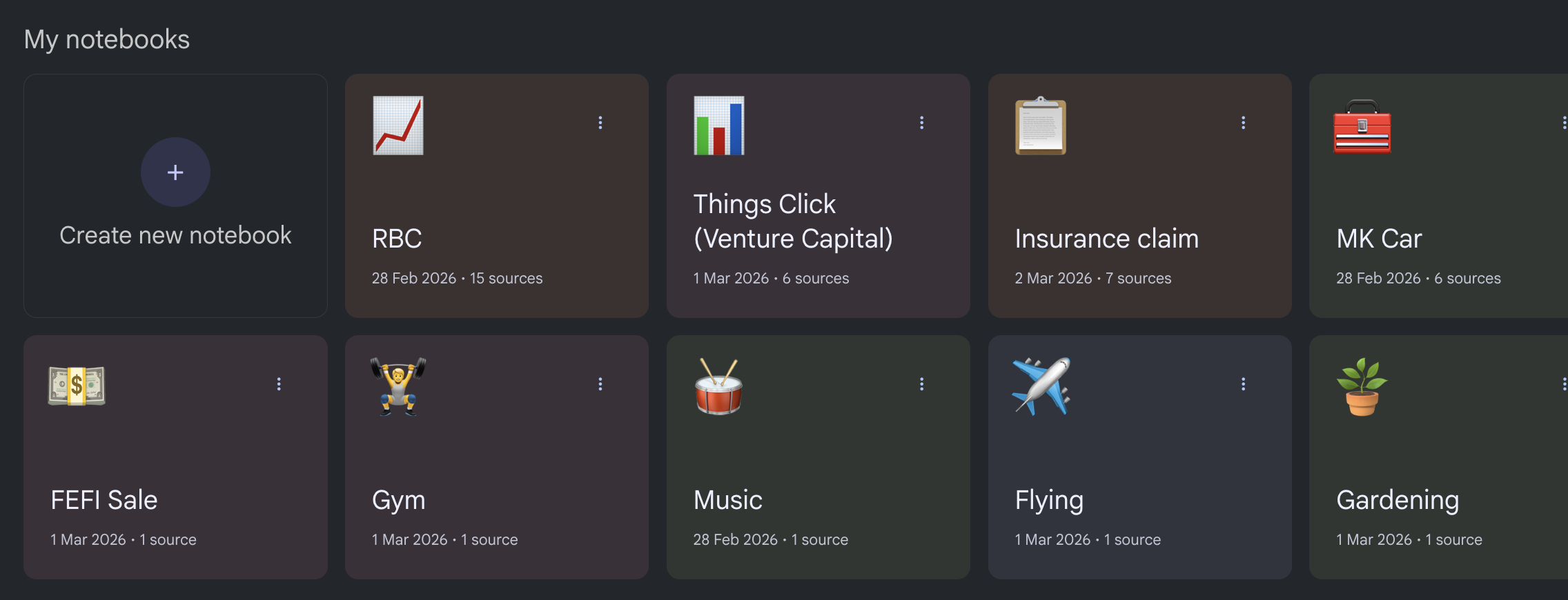
- Never send a document to a lawyer "raw": Pre-review it with AI first. If you're running a project for a client contract negotiation, you can upload 50 sources in to one NotebookLM project, this keeps the conversation constrained and focused.
- Ask for the "Why": Ask AI to summarise risk and explain commercial implications for decisions - not just give you the decisions themselves.
- Model the math: Calculate financial outcomes before asking for legal structuring.
- Draft your own redlines: It's faster for your lawyers to edit your intent than to guess it.
- Separate the issues: Distinguish legal risk from mere commercial discomfort.
Good luck with your next negotiation. And remember: if you find yourself arguing with your AI at midnight over the definition of "force majeure," you aren’t losing your mind.